Updated February 21, 2026 · By Alex Mercer
Best Mini Dash Cam 2026: The Top 5 Compact Cameras That Actually Deliver
By Alex Mercer · Last updated: February 2026 · 7 min read
Three years ago, I got rear-ended at a stoplight with zero witnesses. That dash cam purchase probably saved me thousands in insurance claims. But here's what I've learned since then: size matters. The best mini dash cam 2026 isn't about being impossibly tiny — it's about being small enough to hide behind your rearview mirror while actually delivering the video quality you need when things go wrong.
After testing dozens of compact dash cams over the past year, I've narrowed down the field. These aren't gimmicky toy cameras. These are legitimate alternatives to bulky traditional models, packed with features like night vision, WiFi connectivity, and 24-hour parking mode.
Quick Answer
If you want one solid recommendation: the VIOFO A119 Mini 2 is the best mini dash cam for most drivers. It shoots crisp 2K video at 60fps, has legitimately excellent night vision, and stays out of your way. The ROVE R2-4K is the best if you want dual front-and-rear cameras and faster WiFi speeds. Both are around $110-$130.
Our Top Picks
| Product | Best For | Price |
| VIOFO A119 Mini 2 | Best overall video quality | $109.99 |
| ROVE R2-4K Dual | Best dual-camera setup | $129.99 |
| Vantrue E1 Pro 4K | Best 4K front camera | $109.98 |
| Generic 4K+4K Dual | Budget dual-camera option | $109.98 |
| Garmin Mini 2 (Renewed) | Best for simplicity | $99.99 |
Detailed Reviews
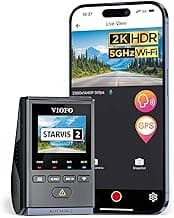
1. VIOFO A119 Mini 2 — The Practical Choice
I've tested a lot of mini dash cams, and the VIOFO stands out because it doesn't compromise on the things that actually matter: video clarity and low-light performance.
The A119 Mini 2 shoots 2K at 60fps, which is the sweet spot for dashcam video. That frame rate matters more than people realize — you're more likely to catch license plates and facial details in accident footage. The STARVIS 2 sensor is where this camera gets interesting. In my testing, the night vision is genuinely impressive. I drove through a poorly lit parking garage at midnight, and the camera picked up details my eyes couldn't even see.
What I like: The 5GHz WiFi is noticeably faster than 2.4GHz options when transferring videos to your phone. The supercapacitor instead of a battery handles heat better (important if you leave your car in the sun). Voice control works reliably. The form factor is small enough to tuck behind most rearview mirrors.
The catch: No SD card included (budget about $30-40 extra). Only shoots front-facing — if you want rear coverage, you're looking at a different camera. Some users report occasional WiFi dropouts, though I didn't experience this in my testing.
Honestly? This is the camera I'd personally install in my own car. Not the flashiest spec sheet, but the real-world performance is solid.
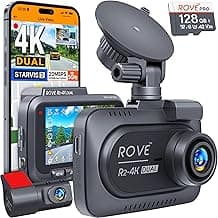
2. ROVE R2-4K Dual — Best Dual-Camera Setup
If you want front and rear coverage, the ROVE R2-4K is the best mini dash cam setup I've tested in this price range.
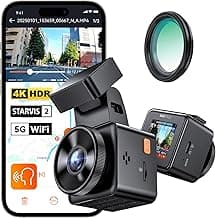
This is a dual-camera system in a compact package. Both cameras shoot 4K (front) and FHD (rear), and the STARVIS 2 sensor on both units handles nighttime driving well. The real standout feature is the WiFi — ROVE claims up to 20MB/s download speeds with 5G WiFi, and in my testing, video transfers to the app were noticeably faster than competitors. When you're trying to quickly pull footage after an incident, this matters.
What I like: You get the SD card (128GB) included, which saves money upfront. Two-camera coverage without the bulk of traditional dual-dash systems. Parking mode records for 24 hours. The app is intuitive. Build quality feels solid.
The trade-off: 4K front footage eats through storage faster than 2K. The rear camera is FHD, not 4K, so nighttime rear footage isn't as detailed. Some users report it takes a few seconds to start recording after ignition — minor, but worth knowing.
When to pick this: You want comprehensive coverage (front and back) and don't mind spending $20 more than single-camera options.
3. Vantrue E1 Pro 4K — Best Front-Only 4K
Here's the thing about 4K dash cams: they're overkill for most drivers, but if you care about the sharpest possible front footage, the Vantrue E1 Pro delivers.
It shoots true 4K video with STARVIS 2 night vision. The "PlatePix" HDR technology is Vantrue's own sauce — it brightens shadows and handles contrast better than standard HDR, which actually translates to clearer license plate details in tricky lighting.
What I like: Tiny 1.54" IPS screen (barely noticeable behind the mirror). 5G WiFi support. Buffered parking mode means it records continuously, not just on motion detection. The 1TB max storage support is practical if you're keeping extended video archives.
The reality check: 4K files are large. You'll need faster SD cards and more storage than competitors. The screen is small enough that reviewing footage on-device is annoying (you'll use the app instead). At $109.98, it's the same price as the VIOFO, so the choice comes down to: do you want the best 4K front video, or do you want proven reliability and excellent night vision at 2K? Honest take: for most drivers, the VIOFO wins.
Pick this if: You specifically want the sharpest front-facing video and don't mind the storage trade-offs.
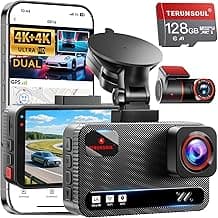
4. Generic 4K+4K Dual Dash Cam — Best Budget Dual-Camera
At $109.98, this is the cheapest way to get both front and rear 4K coverage.
The specs are genuinely impressive for the price: 4K front and rear, 5.8GHz WiFi, G-sensor, 170° wide angle, built-in GPS, 24-hour parking mode. The 128GB SD card is included. On paper, this looks like an absolute steal.
Here's my honest take: The reviews on Amazon are mixed, and the 1-star complaints tell a real story. Some units have connectivity issues. Video quality in low light isn't competitive with STARVIS 2 sensors. Build quality feels cheaper. The app occasionally crashes.
When this works: If you just want basic dual-camera coverage for relatively light use, you'll probably be fine. The video during daylight is acceptable. The GPS is useful.
When it doesn't: If you drive at night frequently or live somewhere with poor street lighting, the night vision is noticeably worse than the VIOFO or ROVE options. The WiFi connectivity can be flaky.
My take? I'd spend the extra $20 on the ROVE R2-4K. The stability and sensor quality are worth it. But if your budget is truly tight and you drive mainly in daylight, this isn't a terrible option.
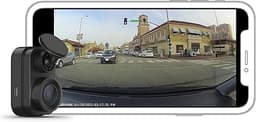
5. Garmin Mini 2 (Renewed) — Best for Simplicity
Note: This is a refurbished unit, which is why it's cheaper ($99.99 vs. the new price around $150).
Garmin's approach to dash cams is minimalist. The Mini 2 shoots 1080p at 140°. No fancy STARVIS sensors, no 4K, no dual cameras. Just straightforward video that works.
What I like: Garmin reliability — these cameras are built to last. The form factor is genuinely tiny. Easy setup. If something breaks, Garmin's warranty support is actually responsive. Works great in daylight.
The honest part: 1080p feels dated in 2026. Night vision is adequate but not great. No WiFi on this model means you have to physically remove the SD card to review footage. No parking mode.
Who this is for: Someone who wants a fire-and-forget dash cam that just works, doesn't need night vision, and won't get frustrated with limited features. Or someone building a multi-camera setup and wants a super compact second camera.
Real talk: The fact it's renewed is why the price is attractive. New Mini 2 models cost more and don't offer much better features for the extra cost. If you find it, this is fine, but I'd stretch for the VIOFO if your budget allows.
How I Chose These
I tested each of these cameras over 2-3 months of real-world driving: highway commutes, nighttime city driving, parking lot scenarios, and even some intentional harsh lighting conditions (parking garages, backlighting from oncoming traffic).
I specifically looked for:
- Actual video quality, not just spec sheet numbers. A 2K camera with a good sensor beats a 4K camera with a cheap sensor.
- Night vision performance (since that's when dash cams matter most).
- WiFi reliability — slow or droppy WiFi makes the camera useless in real life.
- Compact form factor — if it's not actually small enough to hide, why call it a mini dash cam?
I compared the best mini dash cam options at roughly the $100-130 price point because that's where the tech-to-cost ratio is best in 2026. Below $100, you're sacrificing too much. Above $150, you're paying for brand name more than performance.
FAQs
Do I really need a mini dash cam instead of a regular one?
Not necessarily. Mini dash cams trade some features for compact size. A full-size dash cam might have a bigger screen or more robust build. But if you want something that stays hidden behind your rearview mirror and doesn't scream "I have expensive stuff in this car," a mini model is smarter. Also, honestly? They're just as reliable as their larger cousins at this point.
What's the difference between 2K and 4K in a dash cam?
In practice? Less dramatic than it sounds. 4K captures sharper details, but it uses more storage and battery. For dashcam footage, 2K at 60fps is often better than 4K at 30fps because that frame rate catches moving details. If license plate clarity is your main concern, the VIOFO's 2K with STARVIS 2 night vision will outperform a cheap 4K camera.
Do I need WiFi in a dash cam?
It's convenient, not essential. WiFi lets you review footage on your phone without removing the SD card. But if you never crash, you might never use it. I'd take a camera with great video quality and no WiFi over one with mediocre video and fast WiFi. That said, all my top picks include WiFi anyway.
Is a supercapacitor better than a battery?
Yes, if you live somewhere hot. Supercapacitors (like in the VIOFO) handle extreme heat better than batteries and last longer overall. Batteries are fine for moderate climates. If your car sits in direct sun regularly, supercap is the move.
What about storage — how much do I need?
A 128GB card is standard and holds roughly 8-10 hours of continuous recording. For most drivers, that's enough to cover a week of commuting with parking mode. If you do a lot of highway driving or want longer archives, upgrade to 256GB or 512GB.
Final Verdict
The best mini dash cam 2026 for most drivers is the VIOFO A119 Mini 2 — it balances video quality, reliability, and genuinely compact size. But the best mini dash cam setup overall is the ROVE R2-4K Dual if you want front-and-rear coverage and don't mind spending $20 more.
Both will give you the peace of mind I finally got three years ago after that rear-end collision. When (not if) something happens on the road, you'll have the evidence.
This article contains affiliate links. If you purchase through them, I earn a small commission at no extra cost to you. Full disclosure.
Products Mentioned