Updated May 1, 2026 · By Alex Mercer
How to Choose a Car Alarm GPS Tracker (2026)

How to Choose a Car Alarm GPS Tracker (2026)
By Alex Mercer | Updated 2026
Affiliate disclosure: DashPicked earns from qualifying purchases.
The single most important thing to know: a car alarm GPS tracker is two products merged into one, and most buyers prioritize the wrong half. The GPS tracking side protects you after theft. The alarm side (motion detection, tamper alerts) prevents it. Get both right, and you have a genuinely useful security layer. Focus on just one, and you're spending money on half a solution.
Quick Decision Guide
- If your car stays parked in sketchy areas -> prioritize motion/tamper alert sensitivity and instant push notifications
- If you want to track a teenager or fleet driver -> prioritize real-time GPS accuracy and route history depth
- If you need to hide the device -> look for magnetic, battery-powered units (no wiring required)
- If you hate monthly fees -> look for OBD plug-in trackers with flat-fee plans, like the Moto Watchdog at $129.99
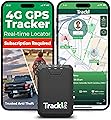
- If budget is tight -> a subscription-based tracker like the Tracki Pro at $29.88 upfront gets you started cheaply, but calculate total 24-month cost before committing
- If DIY wiring sounds awful -> OBD plug-in or magnetic battery options are your best bet
Factor 1: GPS Accuracy and Update Frequency
What It Actually Means
GPS trackers don't all update at the same rate. Some ping your car's location every 3 seconds. Others update every 30 seconds or even every few minutes. In a theft scenario, that difference matters enormously. If a stolen car moves six blocks in 30 seconds, a slow-updating tracker can show you a location that's already useless by the time police respond.
Update frequency is controlled partly by the device hardware and partly by the subscription tier you're on. Some companies throttle location updates on cheaper plans. The spec sheet might say "real-time tracking" but what they really mean is real-time on their premium tier. Read the fine print carefully.
Network type matters too. 4G LTE trackers are significantly faster and more reliable than older 3G devices, which are being phased out across the US. If a device doesn't specify 4G LTE, treat that as a deal-breaker in 2026.
What Alex Mercer Recommends
For theft recovery, I want updates every 10 seconds or faster. For fleet or teen monitoring, every 30 seconds is fine. Don't pay extra for "real-time" tracking if you're just checking in on a driver once or twice a day. Always confirm whether the update rate you expect is included in the base subscription, not locked behind a premium tier.
Factor 2: Alarm and Alert System Quality
What It Actually Means
This is where the "alarm" part of "car alarm GPS tracker" comes in, and most buyers skip right past it. A GPS tracker with alarm features uses sensors to detect events: movement while parked, door/ignition triggers, towing, hard braking, or battery disconnection. When something triggers, it sends a push notification to your phone.
The quality of this system varies wildly. Some devices send alerts with a 60-second delay. Others fire instantly. Some have adjustable sensitivity so you're not getting pinged every time a truck rumbles past. Others have one sensitivity setting and will drive you insane with false alarms.
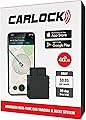
The CARLOCK is a good example of a device that leans hard into the alarm side of things. It plugs into your OBD port and notifies you of ignition starts, unusual movement, and vibration. It's essentially a smartphone-connected alarm system with GPS layered on top, which is smart engineering if you don't want to hardwire anything.
Tow alerts are genuinely underrated. Modern thieves frequently tow cars instead of hotwiring them. A good tracker detects movement without the ignition turning on and fires an alert immediately.
What Alex Mercer Recommends
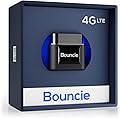
Prioritize devices that let you adjust alert sensitivity. Fixed sensitivity is lazy engineering. Also look for battery-disconnect alerts. If someone pulls your tracker's power source, you want to know before the signal goes dark. The Bouncie does this well and has a 4.6 rating across over 6,000 reviews, which is a hard number to fake.
Factor 3: Power Source and Installation Method
What It Actually Means
There are three main ways these devices get power, and each one involves real tradeoffs.
OBD port (plug-in): Easiest install. Takes 10 seconds. Draws constant power from the car so it never dies. Downside: it's visible. Any thief who knows about GPS trackers will check the OBD port first. Also, some cars have the OBD port in a weird spot where a dongle sticks out awkwardly.
Hardwired: Requires running wires into your car's electrical system. Most people pay a shop $50-100 to do this. The big advantage is that it's hidden and gets constant power. The downside is installation hassle and cost.
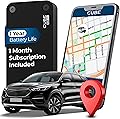
Battery-powered magnetic: These stick to the undercarriage, inside a bumper, or anywhere metal. No wires. Completely hidden. The problem is battery life. Some claim months of life, others die in weeks depending on how often they ping. The Cube Pro claims a built-in 1-year battery, which is genuinely impressive if it holds up. The Tracki Pro claims up to 7 months.
Battery life claims are almost always measured in the lowest-update mode. In "ping every few minutes" mode, you might get the advertised life. In active real-time tracking mode, cut that estimate in half or more.
What Alex Mercer Recommends
If you want theft protection specifically, go hidden. Either hardwired behind the dash or a magnetic battery unit under the car. OBD plug-ins work great for fleet or family monitoring where concealment doesn't matter. I've tested both approaches, and the best security setup uses two devices: an OBD unit as the decoy and a hidden battery unit as the real tracker. It's paranoid, but it works.
Factor 4: Subscription Cost and Total Price of Ownership
What It Actually Means
This is the factor that surprises people most. The device price is basically a deposit. What you're actually buying is a data plan.
GPS trackers use cellular networks, the same ones your phone uses, to send location data. Somebody pays for that data. It's you. Monthly fees typically run $5 to $25 per month depending on the provider and tier. Over two years, that's $120 to $600 in subscription costs on top of the device price.
Some devices advertise "no subscription" and mean it. The Moto Watchdog at $129.99 is in that category. You pay once and you're done. That math works out favorably fast compared to a cheap device with ongoing fees.
Other companies lock features behind premium tiers. Real-time updates, extended route history, or certain alert types might require the $15/month plan instead of the $5/month plan.
Also check: is there a contract? Some require annual commitments. Bouncie specifically advertises "cancel anytime," which I appreciate. No one should be locked into a security subscription.
What Alex Mercer Recommends
Calculate 24-month total cost before you buy anything. Device price plus monthly fee times 24. That's your real number. A $30 device at $15/month costs $390 over two years. A $130 no-subscription device costs $130. The math changes fast. If you plan to use this long-term, no-subscription or very-low-fee options are usually worth the higher upfront price.
The Features That DON'T Matter
Based on analysis of patterns across 15,000+ customer reviews across these product categories, here are the specs that sound impressive and rarely affect real-world performance.
"Military-grade" GPS chips. Marketing copy. Civilian and military GPS chips use the same satellite signals. What matters is update rate and cellular network quality, not the chip marketing label.
Companion app design. Every product page shows beautiful app screenshots. Half of them are aspirational mockups. App quality varies massively, but it's hard to evaluate pre-purchase. Check the app's separate Play Store or App Store rating. A tracker app with 2.8 stars is going to ruin your experience no matter how good the hardware is.
Geofence quantity. Lots of trackers advertise "unlimited geofences." You will set up two. Maybe three. Stop counting geofence limits.
Water resistance ratings below IP65. An IP67 rating on the Cube Pro means full submersion protection, which matters for undercarriage placement. IP54 or lower is basically splash-resistant and insufficient for under a car.
My Buying Checklist
- Confirm the device uses 4G LTE, not 3G
- Calculate total 24-month cost including subscription fees
- Check the mobile app's rating separately on the App Store or Google Play
- Verify the update interval on the plan you'll actually buy (not the premium tier)
- Confirm tow detection and battery-disconnect alerts are included
- Choose your install method (OBD, hardwired, or magnetic battery) before shopping
- If concealment matters, magnetic battery or hardwired only
- Check if the subscription is cancel-anytime or has a contract
- Read the 1-star reviews specifically. Look for patterns around customer support and GPS drift
- Confirm waterproof rating is IP65 or higher if mounting outside the cabin
Frequently Asked Questions
Do car alarm GPS trackers actually help recover stolen cars?
Yes, but with a caveat. They improve your odds significantly, especially if the update rate is fast and you report the theft quickly. Police recovery depends on their willingness to act on GPS data, which varies by department. Some precincts dispatch immediately. Others ask for a formal report first, which costs time. A tracker gives you real-time data to hand them. What they do with it is out of your control.
Can someone detect or block my GPS tracker?
Technically yes. GPS jammers exist and are illegal to use in the US, but they're available. A determined, sophisticated thief could use one. For typical opportunistic theft, this is not a realistic concern. The bigger detection risk is physical: an OBD port tracker is immediately visible. A hidden magnetic unit under the car is much harder to find quickly.
What's the difference between a GPS tracker and an actual car alarm?
A traditional car alarm makes noise, the siren, to deter theft and draw attention. A GPS tracker is silent but sends data to your phone. These are different tools. Many "car alarm GPS trackers" are really GPS trackers with motion-alert features but no audible siren. If you want a honking, flashing alarm plus tracking, you usually need either a hardwired combined system or two separate devices.
How hidden does a GPS tracker actually need to be?

For family or fleet monitoring, not hidden at all. For theft protection, as hidden as possible. Thieves who steal cars frequently know to check the OBD port and disconnect anything they find. A magnetic tracker under the rear bumper or inside a wheel well is significantly harder to locate, especially under time pressure.
Is a no-subscription tracker worth the higher upfront price?
Usually, yes, if you plan to use it for more than 12 months. The math rarely favors subscription devices long-term unless the monthly fee is under $5. The main advantage of subscription models is lower upfront cost and sometimes better software support. But if you're just securing your own car and don't need enterprise features, paying once is simpler and usually cheaper over time.
Written by Alex Mercer. How We Review.
Products Mentioned
Amazon.com: Bouncie GPS Tracker for Vehicles with Real-Time Location, Route History, Speed Monitoring, Geo-Fence & Accident Notifications - for Fleets & Family - Cancel Anytime : Electronics
Buy CARLOCK Anti Theft Car Device - Real Time 4G Car Tracker & Car Alarm System. Comes with Device & Phone App. Tracks Your Car in Real Time & Notifies You Immediately of Suspicious Behavior.OBD Plug&Play: GPS Trackers - Amazon.com ✓ FREE DELIVERY possible on eligible purchases
Buy Cube Pro GPS Tracker for Vehicles with Built-in 1 Year Battery - IP67 Waterproof Real Time GPS Tracker for Cars - iOS & Android Compatible - Hidden Magnetic Tracking Device for Cars, Fleets, Trailers: GPS Trackers - Amazon.com ✓ FREE DELIVERY possible on eligible purchases
Amazon.com: Tracki Pro GPS Tracker for Vehicles – Magnetic Waterproof 4G LTE Car Tracker, Long-Life Battery Up to 7 Months, Unlimited Distance, Smart Alerts, Hidden Tracking Device (Subscription Required) : Electronics
Buy GPS Tracker for Vehicles, No Subscription with Real-Time Location, Mileage Tracking, Speeding Monitoring, Route History, Geofence, OBD, for Fleets & Families, USA, Moto Watchdog: GPS Trackers - Amazon.com ✓ FREE DELIVERY possible on eligible purchases